Search


The Covid‘passport’ could become an ever-present part of daily life in England as restrictions relax and life begins to return to normal.
Some venues and events are encouraged to require the NHS Covid Pass for entry – and it could become law at the end of September to require two doses of the vaccine.
So what exactly is the pass and how can you get it? Here’s what you need to know.
What is an NHS Covid Pass?
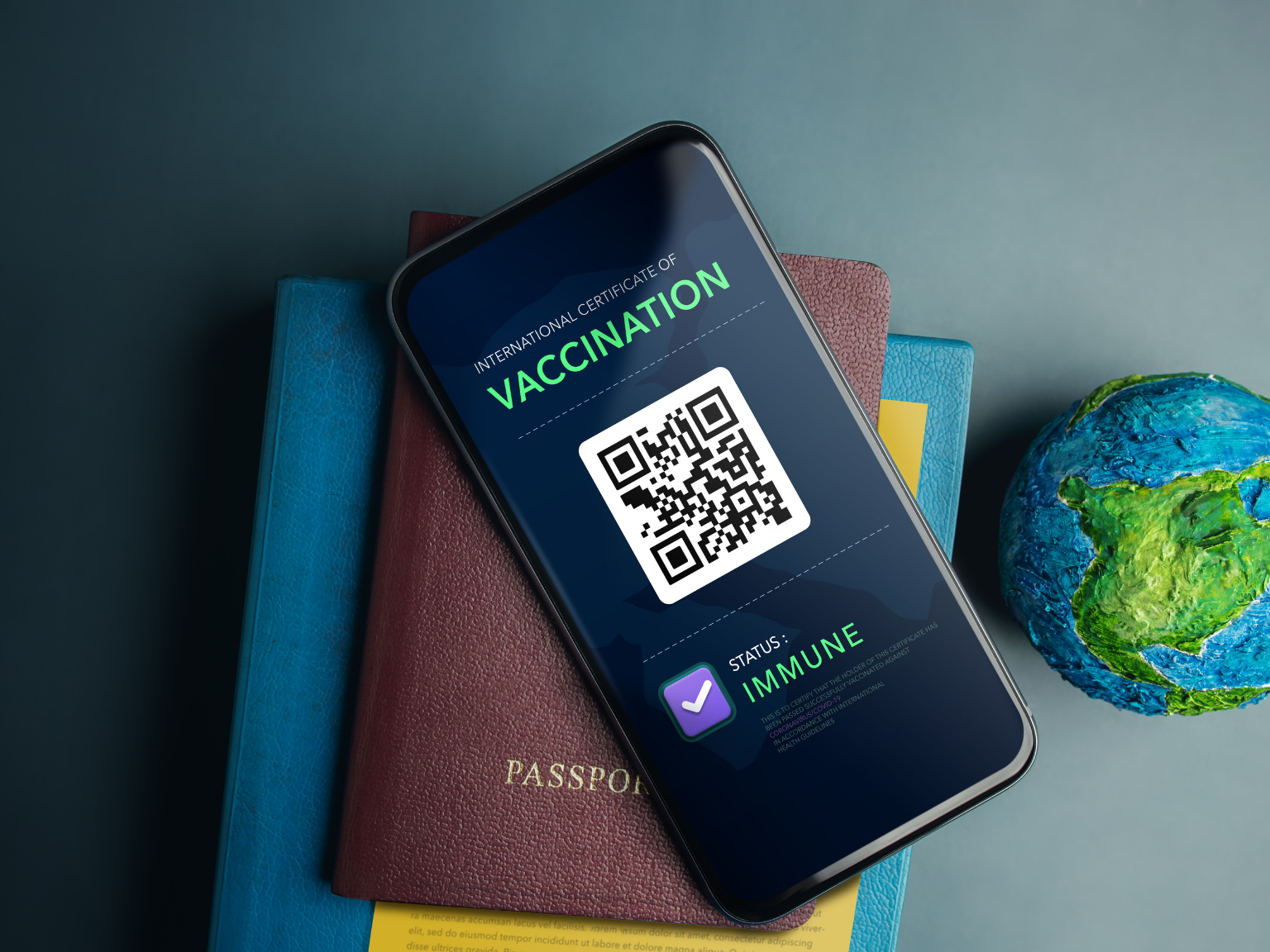
The NHS Covid Pass – or so-called ‘vaccine passport’ – is a record of your vaccination or test status.
This is something you can show for entry to certain events or places that may require either full vaccination, immunity from a recent positive test, or a very recent negative test.
It may be necessary for travelling abroad to some countries and, since July 19, can now be requested in England to prove you are less likely to spread the virus.
Anyone can get a pass, as long as one of these conditions applies:
How to get one
The easiest way for anyone with a smart phone is to simply download the pass on the NHS App – note, this is different to the NHS Covid-19 app.
Once you are logged in, an option to ‘get your NHS Covid Pass’ will already be laid out on the home page. Click there to access your pass.
In the app, your Covid status will include a barcode with an expiry date. This is simply the date your barcode will automatically refresh and it will update whenever you log in.
This is important to note if you are planning on either printing off these barcodes or storing them as a PDF – as they may be out of date by the time you use them.
You will, however, always be able to access up-to-date barcodes on the app itself. It is possible to get your pass from the NHS website too.
You can also ask for your pass to be sent to you in the post, either by requesting one online or by calling 119. This paper version will only state your vaccination status and has no expiry date.
Where could you be asked to show one?
Some events and venues may choose to ask for the pass.
Anywhere that fits one of the following descriptions may well opt to require on for entry:
You may also need one if you are planning to travel abroad. What the exact status of your pass – whether it shows full vaccination or proof of immunity – needs to be depends on your destination.
Is it a legal requirement? And could you be turned away for not having one?
Use of the pass is purely voluntary for businesses and organisations, although the government says it encourages its use “in facilities or events where people are likely to be in close proximity to a large number of people from other households for a sustained period of time.”
The government does, however, hope to bring forward a law at the end of September to make two jabs necessary to get into certain venues and events, including night clubs.
While venues are currently free to set their own conditions for entry, what they cannot do is discriminate, lawyer Stephanie Hayden told ITV News.
A bottle of the Pfizer-BioNTech vaccine
She said: “The most obvious one that comes to mind in this situation would potentially be disability.
“So, if for reasons of health, you could not take the vaccine, then it would be wrong under the current legislation and indeed unlawful for a service provider to refuse you access.”
What are the benefits?
Data shows that those vaccinated against Covid-19 are significantly less likely to fall seriously ill from the virus, even if it is still possible to catch it and show symptoms.
The idea behind passports is to make use of the protection vaccines offer – if people mixing within a certain venue are fully vaccinated, the chances of anyone being hospitalised after catching the virus are greatly reduced.
Are there disadvantages to the passes?
One of the fears around using a passport are the effect it could have on people who, for one reason or another, have not yet had the vaccine.
Professor of Social Psychology John Drury, from the University of Sussex, told ITV News: “You only need to look at the demographics of who is getting vaccinated and who isn’t yet to know that some groups are going to be more excluded than others by a passporting system.
“I mean, these are quite consistent patterns that young people, people from deprived communities and ethnic minorities are less likely than other groups to be vaccinated.
“So that would mean that those groups will be more excluded systematically from the activities that require passports.”
So are these passports here to stay?
The future of Covid passes will need to be decided by Parliament Credit: PA
Ultimately, this decision would need to be made in Westminster.
Professor Drury believes these passes could be accepted by the public if they are “limited” in use.
“There has been some research on the conditions under which people would accept vaccine passports,” he told ITV News.
“And that suggests that they’re more acceptable if they have limited application, which means that people are more supportive if these things are not going to be permanent.
“If you look at the purpose, it is that they are all tied around specific purposes. That’s what makes them acceptable.
“So I think it’s a political judgment about whether you might want to keep these things, but from the evidence I’ve seen, I don’t think there’s a lot of public support for permanent use of vaccine passports and similar.”
Adults who can show they are fully vaccinated can avoid quarantine when returning from amber list countries.
Demonstrating your Covid status may also be needed to go to nightclubs and some other venues in England, from the end of September.
In England, the NHS Covid Pass can be used to show your Covid status.
It can be used domestically and for travel if:
You can also use it in England (but not for travel) if:
You can download it via the NHS app (not the NHS Covid-19 app), if you are registered with a GP. You can also get it via the NHS website.
Once you are logged in you can select “domestic” and “travel” pass options.
The system generates a QR code, which lasts for 28 days.
You can also request an NHS Covid Pass letter by calling 119. This only shows vaccination status and has no expiry date.
Under-16s can’t get an NHS Covid Pass because most children aren’t being vaccinated.
Make sure you apply via the official website or app. Do not click on unsolicited emails or texts.
Ministers want “higher risk” settings in England – including nightclubs – to use the NHS Covid Pass. The government plans to make it law by the end of September – when all 18-year-olds will have had the chance to be fully vaccinated
At present this is not a legal requirement – so clubs don’t have to ask for proof.
Some nightclubs and venues have already decided to require customers to have the NHS Covid Pass.
Making the jab compulsory for university students has not been ruled out by the government. It says they will get “advance warning” if they need to be vaccinated before moving to halls of residence.
In Scotland, First Minister Nicola Sturgeon said the government was considering “the possible, albeit limited, use of Covid status certification for access to certain higher risk venues in future”. An app including vaccination details is being developed.
The NHS Covid Pass – or equivalents in other parts of the UK – allows fully vaccinated adults to avoid quarantine when they return from amber-list countries.
France has been an exception to this rule but this is no longer the case from 9 August.
Adults fully vaccinated in the US and most European countries also don’t have to self-isolate upon arrival from amber-list countries. Those vaccinated in the US can show a CDC card and proof of US residency, such as a passport or Green Card.
Proving your vaccination status is also required by some other countries for entry.
The government says more than 30 countries, including Greece and Spain, now accept the NHS pass.
You must check your destination’s entry rules before you book – and keep checking them before you travel.
In Wales, double-vaccinated adults no longer have to self-isolate if a close contact tests positive for Covid.
And from 16 August fully vaccinated adults and under-18s in England also won’t have to self-isolate if a close contact tests positive for Covid.
Scotland plans to introduce similar rules for adults, and is considering whether it can do the same for under-18s.
Over-16s in Scotland can request a paper copy of their vaccination status via the NHS inform website, or by calling 0808 196 8565. An app is being developed.
You can download the NHS Covid Pass in Wales, or you can request a paper copy by calling 0300 303 5667, at least five days after your final dose.
People in Northern Ireland can apply for the certificate online and use it for travel. Holidaymakers have been asked to use the service only if they are travelling soon, because of technical problems.
Starting university is a big step so ensuring that your physical and mental health is being cared for is essential. As a student, there are a range of healthcare services available through the NHS, so you can receive the advice and treatment you need while living away from home.
Here are four healthcare services you may need as a student.
There’s no doubt that your university journey can be challenging. From living independently to ongoing stress and more, it’s okay to feel overwhelmed. Seeking wellbeing services such as counselling is a great way of managing your mental health safely. Your GP can provide practical advice as well as refer you to appropriate services.
University is a time for growth and part of that often includes exploring sexuality and relationships. According to the 2018 Let’s Talk about Sex’ survey conducted by the University of Bristol, 36% of students had never had sex when they started university. Whether you need advice about contraception, pregnancy, getting tested or more, you can access free support via the NHS.
Do you need to book a doctors appointment but have been avoiding it? Focusing on your studies and university life often means that your health gets put on the backfoot. However, online GP services include online consultations and bookings, so you can speak to a clinician quickly and easily.
If you’re going away to university, it may be good to think about vaccinations as you will be mixing with many new people on campus. The MenACWY vaccine protects against 4 different causes of meningitis and septicaemia – your GP can provide this before your academic year. Most universities also recommended having the MMR vaccine as well as the flu jab particularly if you have asthma or long-term health conditions.
The NHS GP student health service is here to help you. Register today and gain access to our online services as well as our four clinics in Wembley, Alperton, Willesden and Queen’s Park. Don’t keep your health concerns to yourself, our medical professionals are available for both physical and mental services as well as general advice for students. Sign up today.
The world of medical care has drastically changed in the past year and you can now see your GP online for many health issues. To avoid going into your next appointment unprepared, it’s a good idea to plan ahead and have everything you need on hand.
The doctor will need to know your vital signs, which means you should know your:
Pulse rate. Take this by placing two fingers (not your thumb) on your neck or wrist to feel your pulse. Count how many beats you can feel in 30 seconds, then double this to get your heart rate.
Breathing rate. This is similar to your pulse. Just pay attention to how many breaths you take for 30 seconds and then double for your rate.
You certainly don’t need much in the way of equipment, but it can be helpful to have a couple of items on hand.
A flashlight or moveable lamp is useful for illuminating shadowed areas, such as your throat. This will help your GP see the issue better. You may need to illuminate a rash or spot, as well, so keep something ready to make it easier for them to see.
Thermometers are another essential item for every home and this will let your GP know what your temperature is. You can also take your temperature over time so you can report the progression of a fever.
If you are diabetic, you should also have a glucometer to check your blood sugar and if you deal with pulmonary disease, you may want to keep a peak flow metre at home. These are both ideal for giving the GP a better idea of how your health is doing.
Finally, this is not essential, but it can be quite helpful to have a pulse oximeter on hand if you have respiratory issues. It will measure the amount of oxygen in your blood.
Ideally, you’ll be in a quiet, tranquil space that has minimal distractions. You should aim to sit in front of a window so there’s natural light on you, but if that isn’t possible, go ahead and choose a well-illuminated space in your home.
You’ll need a bit of room to move around, particularly if you are dealing with pain in other parts of the body than the head and shoulders. Your doctor may need to see you move around in order to evaluate the problem.
If you take any medications, make sure you have the list in front of you. Anything you can log, such as how many times you have had diarrhoea or how often you have vomited, will be useful to the doctor, as well.
When you go into the online GP appointment prepared, you’ll end up getting more benefits than if you aren’t ready. This also ensures your appointment will be quick and efficient.
Ready to talk to a GP about your health? Schedule an appointment with NHS GP today.
The world of medical care has drastically changed in the past year and you can now see your GP online for many health issues. To avoid going into your next appointment unprepared, it’s a good idea to plan ahead and have everything you need on hand.
The doctor will need to know your vital signs, which means you should know your:
Pulse rate. Take this by placing two fingers (not your thumb) on your neck or wrist to feel your pulse. Count how many beats you can feel in 30 seconds, then double this to get your heart rate.
Breathing rate. This is similar to your pulse. Just pay attention to how many breaths you take for 30 seconds and then double for your rate.
You certainly don’t need much in the way of equipment, but it can be helpful to have a couple of items on hand.
A flashlight or moveable lamp is useful for illuminating shadowed areas, such as your throat. This will help your GP see the issue better. You may need to illuminate a rash or spot, as well, so keep something ready to make it easier for them to see.
Thermometers are another essential item for every home and this will let your GP know what your temperature is. You can also take your temperature over time so you can report the progression of a fever.
If you are diabetic, you should also have a glucometer to check your blood sugar and if you deal with pulmonary disease, you may want to keep a peak flow metre at home. These are both ideal for giving the GP a better idea of how your health is doing.
Finally, this is not essential, but it can be quite helpful to have a pulse oximeter on hand if you have respiratory issues. It will measure the amount of oxygen in your blood.
Ideally, you’ll be in a quiet, tranquil space that has minimal distractions. You should aim to sit in front of a window so there’s natural light on you, but if that isn’t possible, go ahead and choose a well-illuminated space in your home.
You’ll need a bit of room to move around, particularly if you are dealing with pain in other parts of the body than the head and shoulders. Your doctor may need to see you move around in order to evaluate the problem.
If you take any medications, make sure you have the list in front of you. Anything you can log, such as how many times you have had diarrhoea or how often you have vomited, will be useful to the doctor, as well.
When you go into the online GP appointment prepared, you’ll end up getting more benefits than if you aren’t ready. This also ensures your appointment will be quick and efficient.
Ready to talk to a GP about your health? Schedule an appointment with NHS GP today.
Find the best local doctors to you based on independent customer reviews and feedback from the people with load of experience.
Click here to show you closest clinic.
If you’re looking for a family doctor or GP, you can check what services they offer and the quality of care you can expect.
When the CQC inspect GP practices, they give them a rating to help you choose care. As well as GPs, they inspect out-of-hours or mobile doctor services, walk-in centres, minor injury units and urgent care centres.
You can use CQC inspection reports and ratings to help you understand the quality of care.
This easiest way to find your local GP branch is to use the search function on the website: Find GP
You do not need proof of address or immigration status, ID or an NHS number.
You might be able to register with a GP surgery that’s not in the area you live. Find out about registering with a GP surgery out of your area
Find a GP that suits what you need. You can look up GP surgeries to see what they offer and how they compare.
Because of coronavirus, try to avoid going into a GP surgery to register.
You can:
If you need help to fill in forms or you are not able to register online, call the GP surgery and let them know.
A GP surgery can refuse to register you because:
NHS patients who are registered with us are fully entitled appointments with their GP Practice, and it is fully free at the point of access, as with all other NHS Primary Care Services.
To get more information on our appointment page: https://www.nhsgp.net/prescriptions-and-appointments